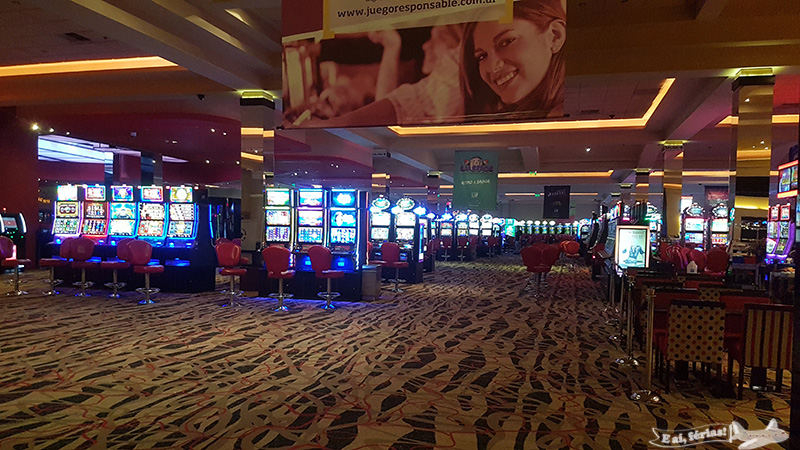
I have invested countless hours dissecting what makes a online table game truly feel immersive, and the solution seldom lies in flashy animations alone. It lies in the mathematical architecture beneath the felt, the seamlessness of the interface, and the psychological rhythm of the deal. At Casino Infinity, I encountered a collection that doesn’t just mirror the land-based casino experience but frequently surpasses it on speed and convenience. This guide is my detailed walkthrough of that ecosystem, crafted to shift you from casual clicking to purposeful, informed play without diminishing the raw excitement that renders a roulette spin or a blackjack round so captivating in the first instance.
The reason Digital Table Games Require a Alternative Strategy
Sitting at a physical table, you rely on sensory cues—the dealer’s rhythm, the sound of chips stacking, even the hesitation of other players. Digital interfaces strip all of that away and exchange it for pure data. I’ve found that players who approach online table games as the same as their brick-and-mortar counterparts often bleed bankroll through speed alone. The digital format eliminates physical downtime; there is zero waiting for a dealer to shuffle or for chips to be counted out by hand. You can face three to four times as many hands per hour in digital blackjack versus a live setting. Without modifying your bet sizing and loss tolerance to match that compressed timeline, you are effectively playing a different, far more volatile game than you aimed for.
Common Pitfalls I Notice Even Experienced Players Make
After studying thousands of digital hands, I’ve listed a few common errors that divide losing players from those who at least stay even. The most common is the insurance bet in blackjack. Unless you are a card counter who knows the exact composition of the remaining deck—which is impossible in a shuffled digital shoe—taking insurance is a mathematically negative bet with a house edge over 7%. Another hidden bankroll drain is playing too many hands simultaneously in multi-hand mode. Spreading your focus across five blackjack hands degrades your decision quality. I cap myself at two hands maximum, and even then, only when I’m fully alert. The third pitfall is chasing roulette “hot numbers” displayed on the screen. These are historical artifacts with zero predictive value; the wheel has no memory, and the digital one is cryptographically guaranteed to be independent.
I also see a psychological trap specific to baccarat scoreboards. Players look at the Bead Plate and Big Road charts, hunting for patterns in what is effectively a random walk. They’ll switch from banker to player because the grid “looks” due for a change. This is pattern recognition running amok. The only reliable pattern is the mathematical edge of the banker bet, which persists regardless of the historical sequence. Treat the scoreboard as entertainment, not as a predictive tool. Your betting decisions should be static and rule-based, not reactive to the previous five outcomes.
Practical Bankroll Methods for Table Games
I structure my bankroll around session units, not total balance. A single unit represents roughly 1% of my dedicated table game bankroll, which lets me to handle the natural variance of a game like roulette without psychological tilt. Here are the non-negotiable rules I apply regardless of the game I’m playing:
- Define a loss floor before you click deal. I place a hard stop at 30% of my session bankroll. If I hit it, I leave the tab, no exceptions. Chasing losses in a digital environment where deposits are instant is the fastest way to wreck a bankroll.
- Limit your win target at 50% profit. Greed is the silent bankroll killer. I view a 50% return on a session as a resounding victory and walk away. The games will still be there tomorrow, but the variance won’t necessarily stay friendly.
- Never increase bet size after a loss. Progressive negative systems like Martingale are mathematically doomed in the long run due to table limits and finite capital. I only ever raise stakes after a win, using a portion of the profit to push the advantage.
- Isolate your bonus funds mentally. If you’re playing through a wagering requirement, acknowledge that you’re in a volume game, not a profit game. Adjust your bet size to maximize playtime and fulfill the requirement, not to hit a jackpot.
How I Assess a Platform’s Casino Table Library
When I examine a platform like Casino Infinity, I don’t just count the number of thumbnails. I seek provider diversity first. A lobby filled with a single software studio will seem monotonous, regardless of how sophisticated that studio is. I expect to find NetEnt’s sleek, minimalist roulette next to Evolution’s feature-heavy blackjack tables. The second metric is rule transparency. I should be able to open the game’s information panel and immediately see the return-to-player percentage and specific rule variations, such as whether the dealer holds on soft 17. If that information is concealed or absent, I expect the worst possible rules and move on. Finally, I check the bet limits. A good library ranges from micro-stakes for testing strategies to high-limit tables for serious sessions.
Adjusting Your Arrangement for Long Sessions
The actual link linking you with the game matters more than many players acknowledge. I’ve found that a cluttered screen with a slow trackpad causes misclicks—placing a stack on the wrong roulette number or accidentally hitting “deal” before I’ve finalized my bet. I invariably use a mouse with a exact sensor for table games, and I scale the game window to a size where the betting grid is clear and clear-cut. Sound design is an additional underrated factor. I keep the ambient casino noise quiet but the alert sounds for my turn audible. This avoids the hypnotic trance that can develop during a long RNG session, where you begin clicking on autopilot. Your aim is to sustain a state of relaxed alertness, not to zone out entirely.
Casino Infinity provides a seamless technical backbone that supports this kind of intentional play. The games open quickly, the bet history is available, and the interface doesn’t resist me when I wish to change my stake between rounds. These seem like minor details, but in a session lasting two hours, a bulky interface that introduces a two-second delay per hand accumulates into significant frustration and rushed decisions. I consistently try a platform’s table game responsiveness with small stakes first, guaranteeing that the “undo” and “rebuy” functions work instantly before I dedicate any serious money to the felt.
Table games are a marathon of micro-decisions, not a sprint. The platform you choose should provide the reliability and precision to make those decisions be impactful. Whether you’re playing blackjack deviations or setting sector bets on the roulette racetrack, the edge resides in preparation, pace control, and the discipline to leave when the session reaches its logical conclusion. Casino Infinity offers you the tools; the strategy stays yours to command.
Examining the Main Game Categories
Not all table games necessitate the same cognitive load, and I classify them by the relationship between player agency and house edge infinitykasino.cz. On one end, you have pure chance games where strategy is irrelevant; on the other, you have skill-based games where decisions directly modify the return-to-player percentage. Understanding where a title lies on this spectrum should determine your entire approach. I’ve seen too many analytical players try to “solve” baccarat, which is essentially a coin-flip with a commission, while simultaneously treating blackjack with a gambler’s superstition instead of a statistician’s rigor. Aligning your mental energy to the game’s decision density is the fastest way to improve your session quality.
Blackjack: The Strategic Player’s Anchor
Blackjack stays the benchmark for low house edge play, but only if you respect the math. I regularly see variations that adjust the payout for a natural blackjack from 3:2 down to 6:5, a seemingly minor shift that nearly doubles the house advantage. At Casino Infinity, I lean toward the classic single-deck and multi-hand variants where the rules are transparent and the strategic deviations are well-documented. The beauty of digital blackjack is that you can keep a basic strategy chart open without anyone judging you. My advice is to ignore the side bets entirely; Perfect Pairs and 21+3 might add visual excitement, but they introduce a lottery-level house edge that erodes the disciplined grind of the main hand.
Roulette: Decoding the Wheel’s Architecture
European Roulette is the only variant I consider important, purely because the single zero reduces the house edge to 2.7%, in contrast to the punishing 5.26% on American double-zero wheels. The online version offers a feature I find especially handy: the racetrack betting interface. This lets you to make call bets like Voisins du Zéro or Tiers du Cylindre with a one click, targeting certain areas of the wheel rather than scattering chips randomly across the felt. I utilize these sector-based strategies not as they overcome the house edge—they simply cannot—but as they structure my session into consistent, trackable blocks of risk. It changes roulette from a messy number soup into a study of wheel geography.
Baccarat: The High-Stakes Minimalist Game
Baccarat is the game I suggest to players who want the glamour of a high-roller table without the mental overhead of strategy charts. The player and banker bets are essentially binary choices with some of the lowest house edges in the casino; the banker bet, even after the 5% commission, hovers around a 1.06% edge. I consider baccarat as a bankroll management exercise. Because the game plays itself according to rigid drawing rules, your only real decision is bet selection and stake sizing. I steer clear of the tie bet with absolute discipline—it carries a grotesque 14% house edge and exists purely as a sucker trap for those chasing an 8:1 payout. Bet on banker, manage your session length, and let the cards fall.
Poker Variants: Casino Hold’em and Beyond
Casino poker variants like Casino Hold’em or Three Card Poker alter the traditional dynamic; you aren’t bluffing opponents but searching for a qualifying hand against the dealer. I consider these games occupy a strange middle ground. They present the familiar hand rankings of Texas Hold’em but remove the psychological warfare, replacing it with a rigid paytable. My analytical gripe with many of these titles is the ante bet structure, which obliges you to commit chips before seeing any community cards. The optimal strategy often boils down to folding a surprisingly high percentage of hands. I only play these when I’m in the mood for a slow, meditative grind, folding hand after hand until a premium starting pair justifies the raise.
Real-Time Dealer vs. RNG: Selecting Your Tempo
The divide between live dealer games and random number generator tables is not about fairness; both are rigorously audited. It’s about tempo and social texture. I use RNG tables when I want to practice strategy repetitions at maximum speed, sometimes hitting 200 hands in an hour to master a new blackjack deviation. Live dealer tables serve a different purpose. They force a slower, more deliberate pace that naturally restrains impulsive betting. The chat function and the visible shuffle of physical cards bring a layer of trust and ritual that pure mathematics cannot replicate. My practical rule is simple: if I’m learning, I go RNG. If I’m playing for leisure with a fixed budget, I choose the live studio for its built-in speed limiter.
Leave a Reply